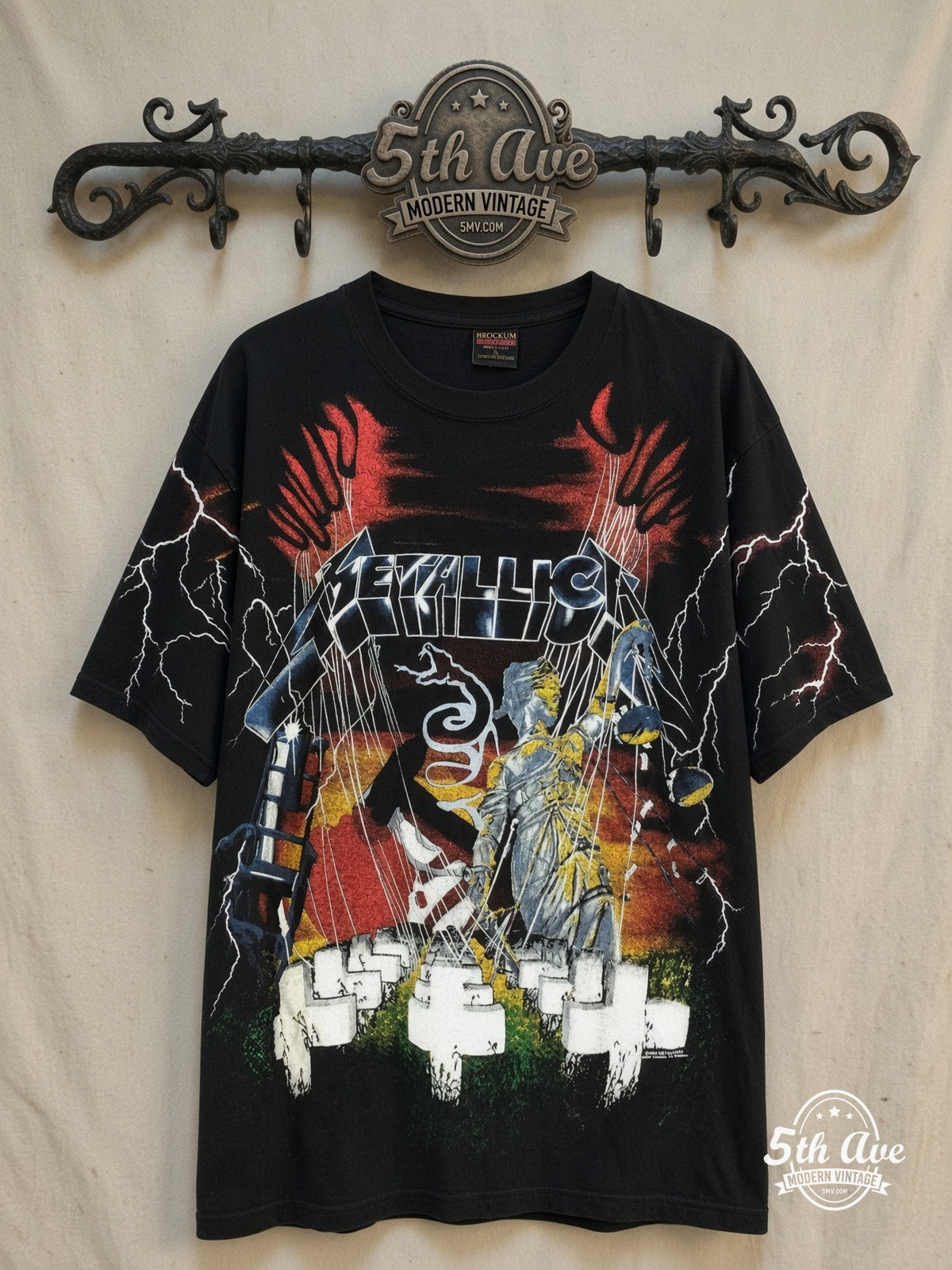
Hand Silk Screening on Cotton

A machine press is built to repeat. Same pull, same pressure, a stack of shirts that all look like the last one. That is useful when you need ten thousand of the same logo by Friday. It is a dull way to print a shirt you actually want to wear.
Hand silk screening is a person, a screen, and a squeegee. The ink goes through the mesh and sits on the shirt. You can feel it. The edge is a little alive. One shirt is not a photocopy of the one before it. For a band tee or a movie graphic, that is the advantage. The print has weight. It does not look sprayed on.
The machine wins on speed and sameness. Hand wins on the deposit of ink, on short runs of one design, and on graphics that are supposed to look like they came off a screen in a shop, not a roll of transfers. A new vintage reprint wants that hand. Thick enough to read from across the street. Soft enough that it cracks a little with wear instead of peeling like a sticker.
Cotton is the other half. Screening on 100% cotton lets the ink grab fiber, not a plastic blend. The shirt breathes. It softens in the wash. A polyester mix can look shiny under a print and hold heat like a jersey. Cotton takes the ink and then gets better. That is why the old tees people still hunt were cotton, and why a reprint should be too.
Put those together and you get the shirt in the photo. The Titanic tee, screen printed, on cotton, on a person. Not a poster taped to fabric. The graphic sits in the cloth. Single stitch on the hem keeps the hang old school. The print does the rest.
Free shipping in the U.S. These take a while to supply. Worth it when the print is one you can feel.
More of that build is in the new vintage note and the single stitch note. The shirt in the photo is here. The rest of the rack starts at the band t-shirts.