How to Collect Vintage Band Tees and Spot Every Style
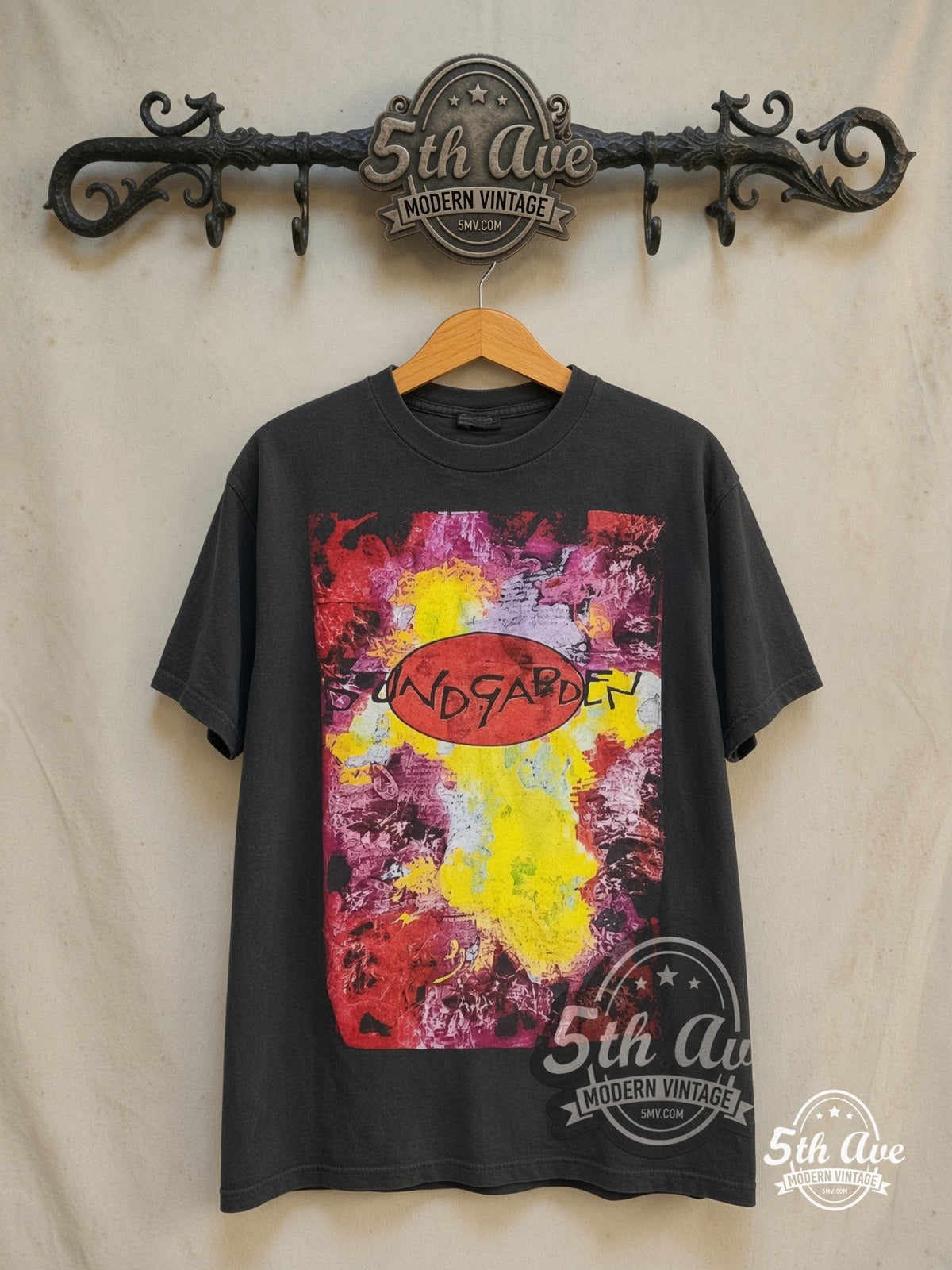
Vintage band tees are one of the easiest things in the world to start collecting and one of the hardest to stop. One shirt turns into five, and five turns into a closet sorted by decade. Whether you're hunting originals at flea markets or building a wearable rack of reprints, it helps to know what you're looking at. This guide walks through the main styles, the details collectors check first, and how to keep your collection honest.
Decide what kind of collection you want
Before you buy anything, think about what ties your shirts together. Some people collect one band in every era they can find. Others collect a single year, a genre, or a look, like 90s grunge, 80s thrash or 70s classic rock. A theme makes it easier to say no to the shirt that's "fine," and yes to the one that actually fits the story.
It's also worth deciding early whether you want shirts to wear or shirts to keep. True originals from the 80s and early 90s can be fragile and pricey. Plenty of collectors keep a few prized originals in a drawer and wear reprints day to day. Both are valid, as long as you know which is which.
The main styles to know
Most vintage band tees fall into a handful of styles. Once you can spot them, a crowded rack gets a lot easier to read.
Tour tees with a back print
The classic concert shirt has the band or album art on the front and a list of tour dates or cities on the back. These are the shirts people picture when they say "vintage band tee." The back print is often the part collectors care about most, because it ties the shirt to a specific run of shows. A good example of the look is our Soundgarden Superunknown Tour 1994 tee, with an abstract front and a city list on the back.
Album art tees
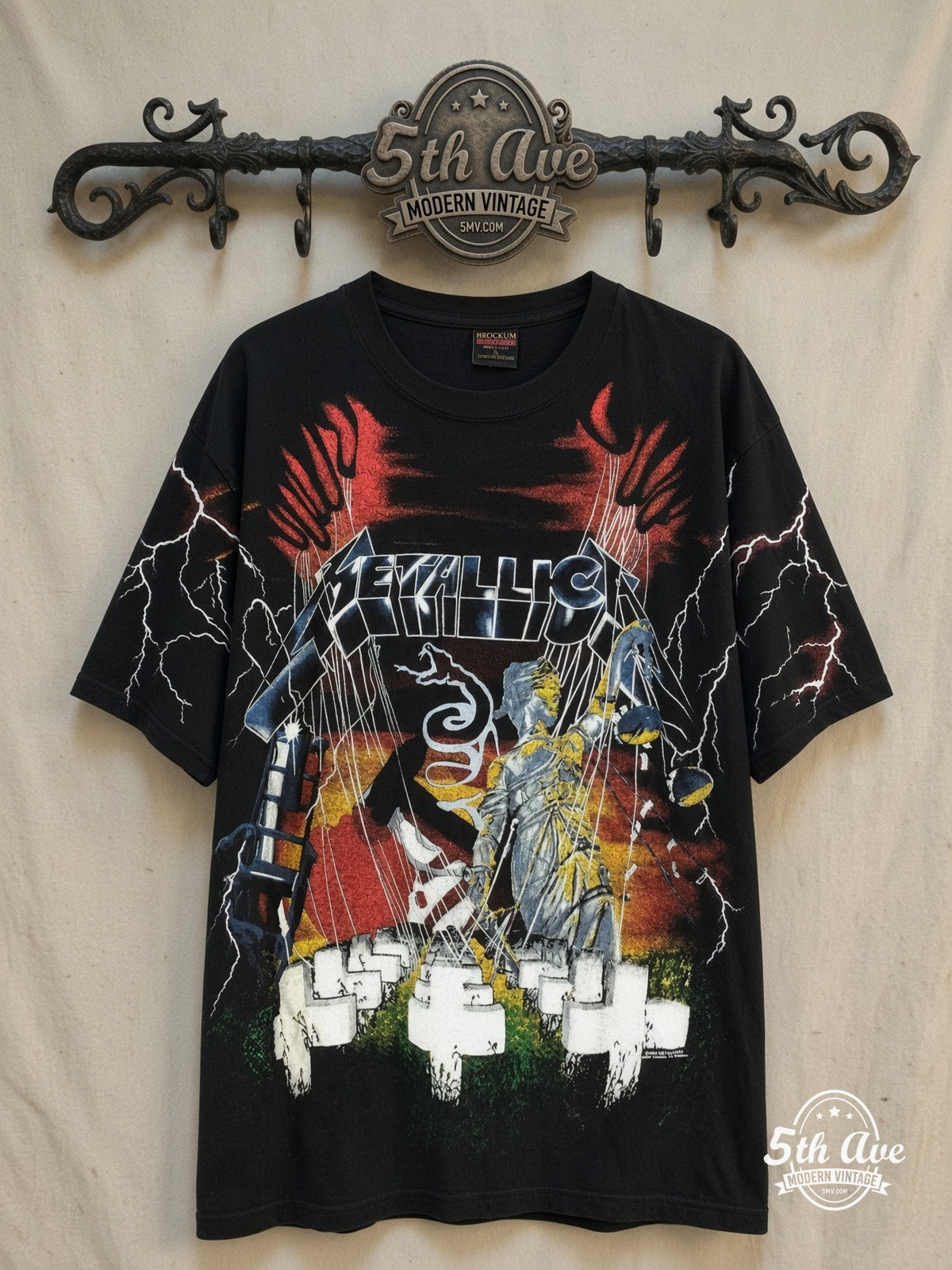
These put a record cover, or a piece of it, front and center. Metal bands are famous for this, with mascots and painted covers that look great blown up on a chest. Iron Maiden's Eddie, drawn for years by Derek Riggs, is the textbook case. Browse the Iron Maiden collection to see how many ways one mascot can show up on a shirt.
Bootleg and parking-lot tees
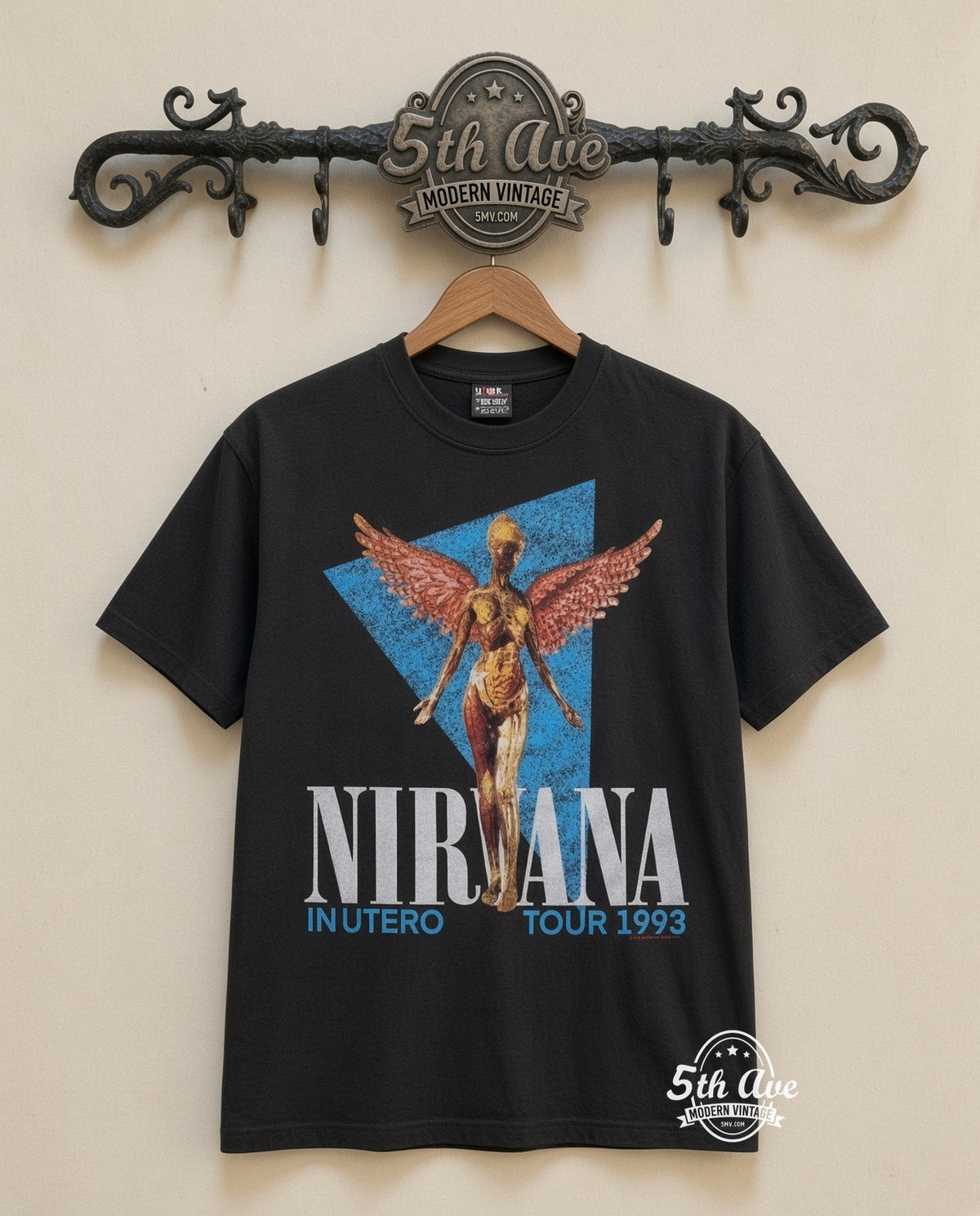
For decades, unofficial shirts were sold outside venues and at swap meets. They often used photos, odd fonts, misspellings or mashed-up artwork that a band's own merch never would. Today some collectors chase old bootlegs on purpose because they're so strange and specific. The style lives on in reprints like this Nirvana bootleg-style single stitch tee.
All-over prints
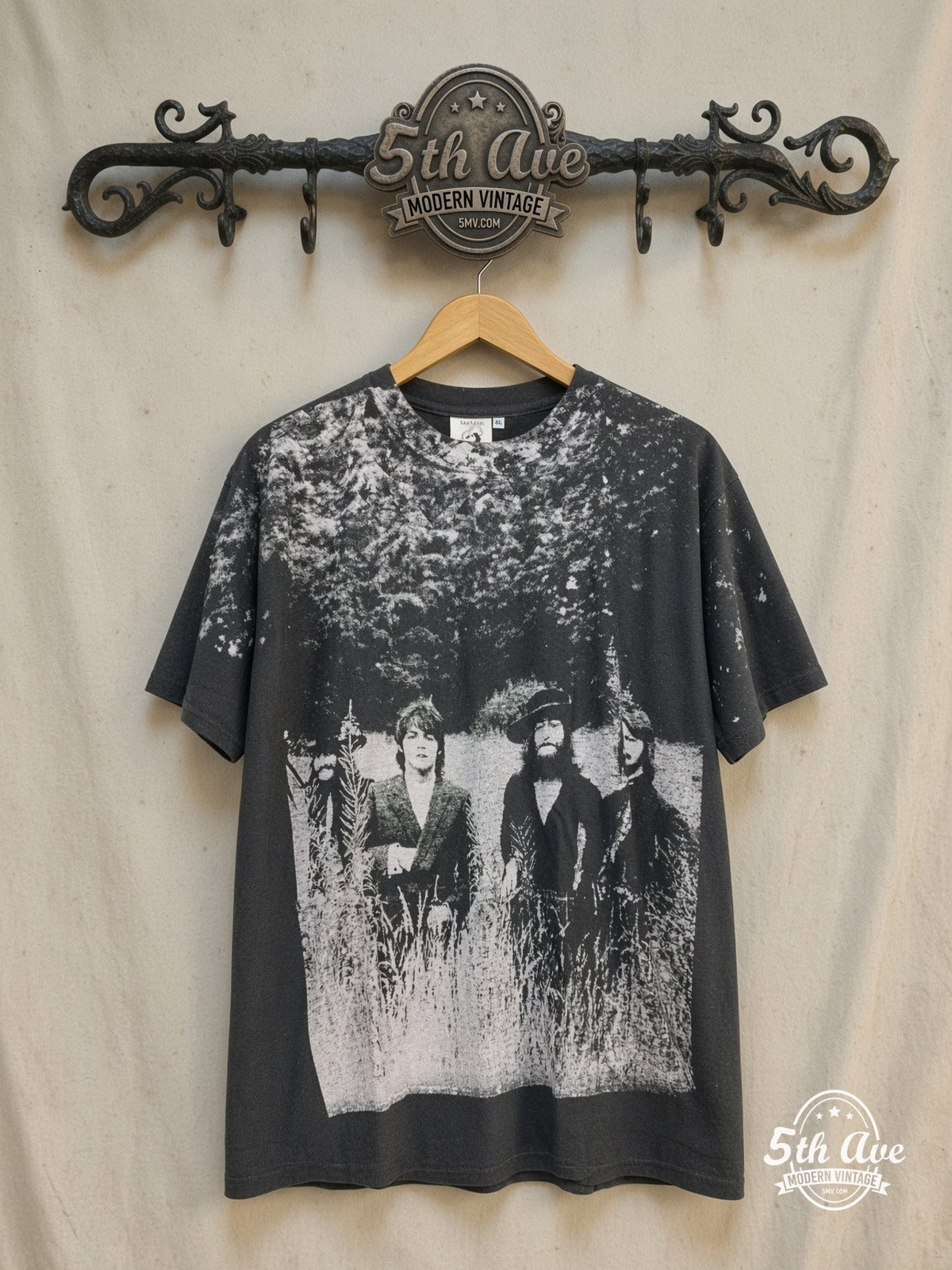
All-over print shirts, sometimes called overprints, cover the whole torso and often the sleeves. They were huge in the 90s for bands, rappers, racing and cartoons, and they're still the loudest thing you can wear. If that's your lane, the All Over Prints rack is the place to start.
Photo, collage and non-band graphics
Live photos, band portraits and collage designs are their own family. And many band tee collectors end up picking up neighboring categories too, like Harley-Davidson dealer shirts and 90s NASCAR tees, because the artwork comes from the same era and has the same bold, oversized feel. You'll find those in Motorsports T-Shirts.
Read the details: stitching, tags and print
When collectors pick up a shirt, they usually check three things before they even look at the price.
Stitching. Many tees made before the mid-1990s were sewn with a single row of stitching on the sleeve and bottom hem. Later shirts mostly moved to a double row. Single stitch is a useful clue, but it isn't proof, because some modern blanks copy it. We break this down in Single Stitch vs Double Stitch Band T-Shirts Explained.
The neck tag. The tag tells you about the blank the shirt was printed on. Brand names like Screen Stars, Brockum, Giant and Winterland come up a lot on 80s and 90s concert shirts. A modern tag on a shirt sold as a 1980s original is a red flag. Our guide to band t-shirt neck tags by decade goes deeper.
The print. Look at how the ink sits and how it has aged. Old prints tend to crack and fade in a natural, uneven way. Also remember that a copyright year printed under the artwork dates the art, not the shirt itself.
No single clue settles the question. Tag, stitching, print and fabric together tell the real story.
Original, bootleg or reprint? Know what you're buying
The vintage market has three overlapping groups: true originals from the era, period bootlegs, and modern reprints. Trouble only starts when one gets sold as another. If a listing says "original 1991," ask for photos of the tag, the hem and the back print. If the seller can't or won't show them, move on.
Reprints have a real place in a collection. They let you wear the designs you love without worrying about a 30-year-old shirt falling apart. Every shirt at 5MV is a new vintage-inspired reprint, and we label them that way. We never sell them as originals.
Take care of what you collect
Wash band tees inside out in cold water and hang them to dry when you can. Heat is hard on both cotton and ink. Store shirts folded rather than on thin hangers, which can stretch the shoulders over time. For originals you rarely wear, keep them out of direct sunlight so the colors don't fade unevenly.
Start your rack
The best collections grow one great shirt at a time. Pick a theme, learn the styles, check the details, and buy what you'll actually enjoy wearing. When you're ready to look around, the full Band T-Shirts collection covers rock, metal, punk, grunge, hip-hop and more.