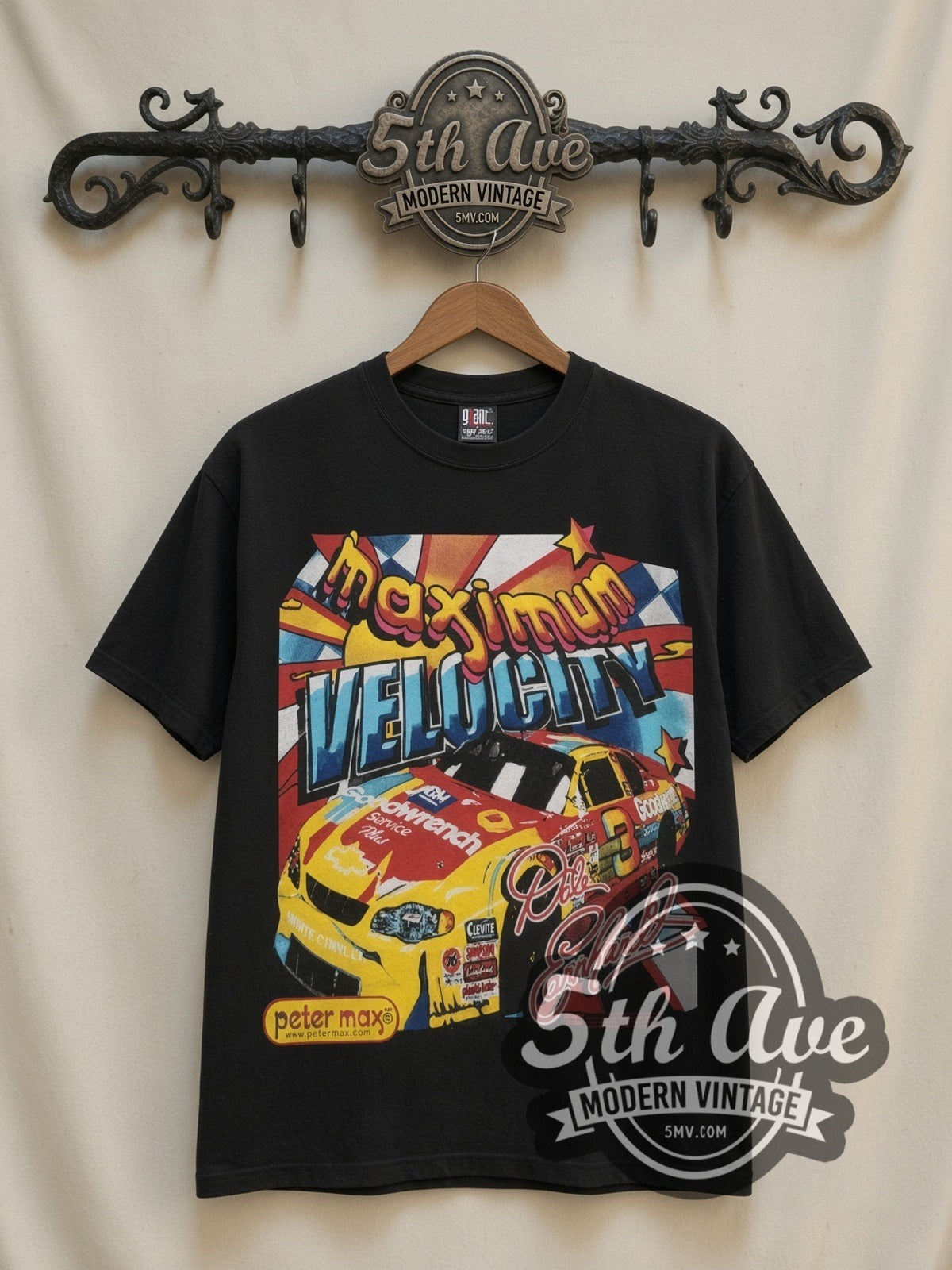
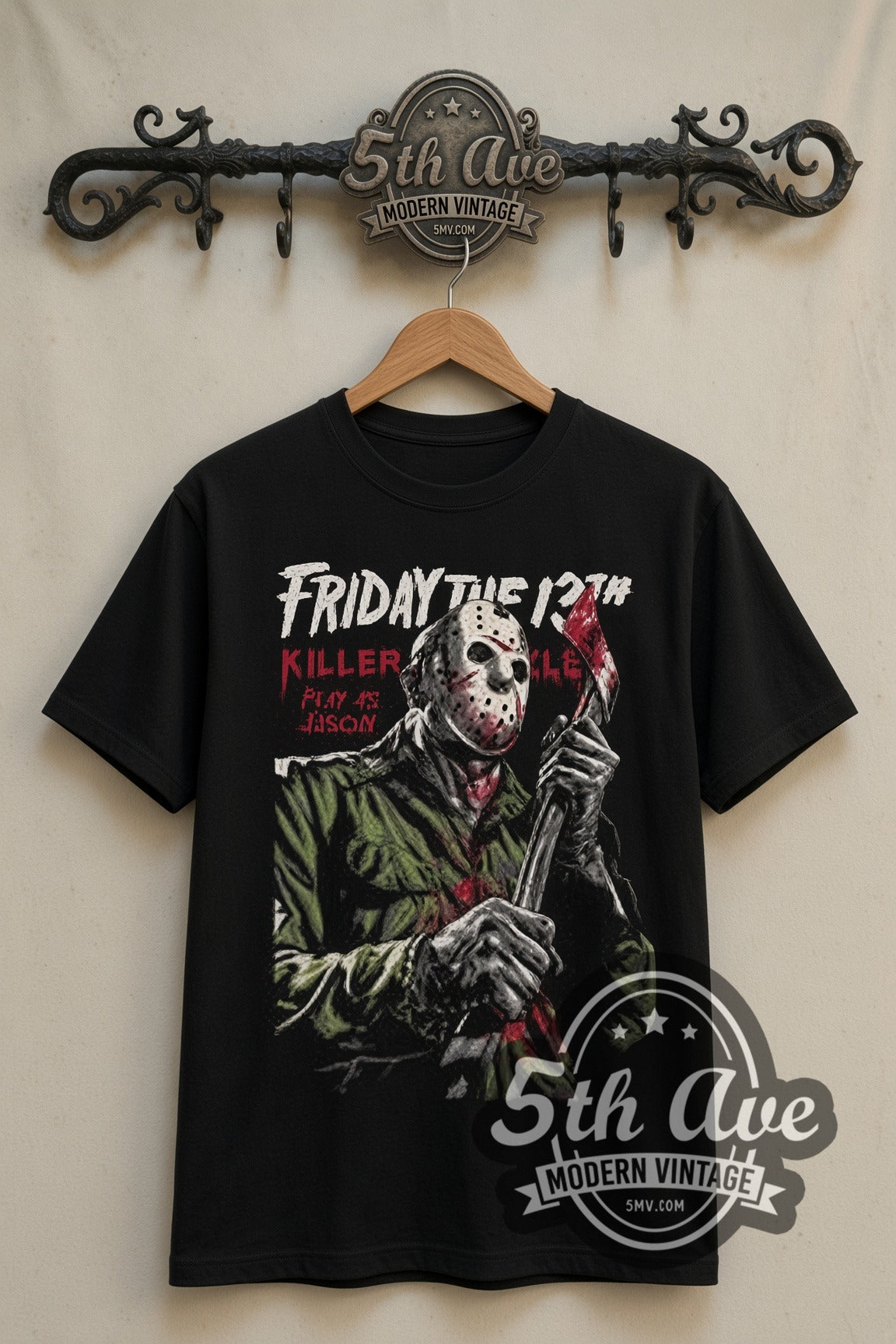
Standard Print vs Overprint T-Shirts (Chest vs Full Coverage)
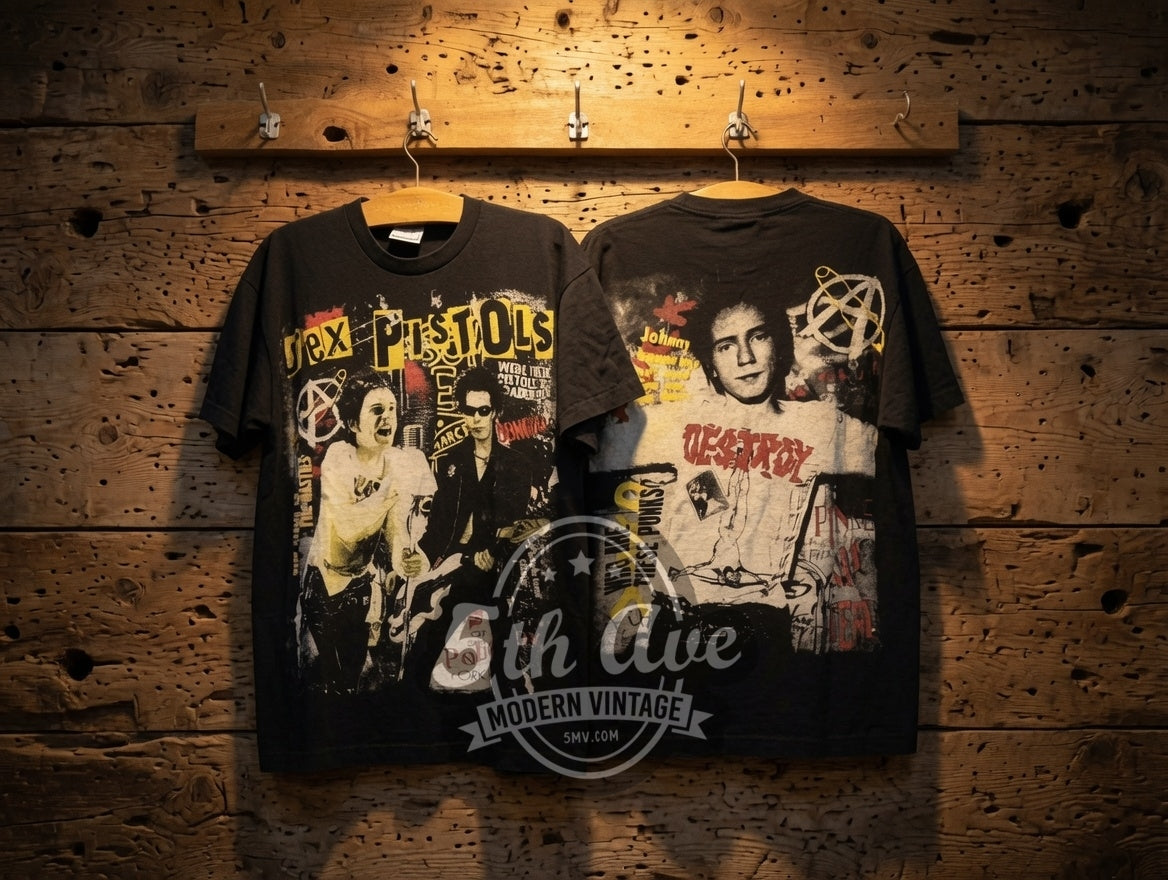
When people talk about a band t-shirt print, they are usually talking about how much of the shirt the art owns — not just which ink is in the bucket. At 5MV we keep it simple:
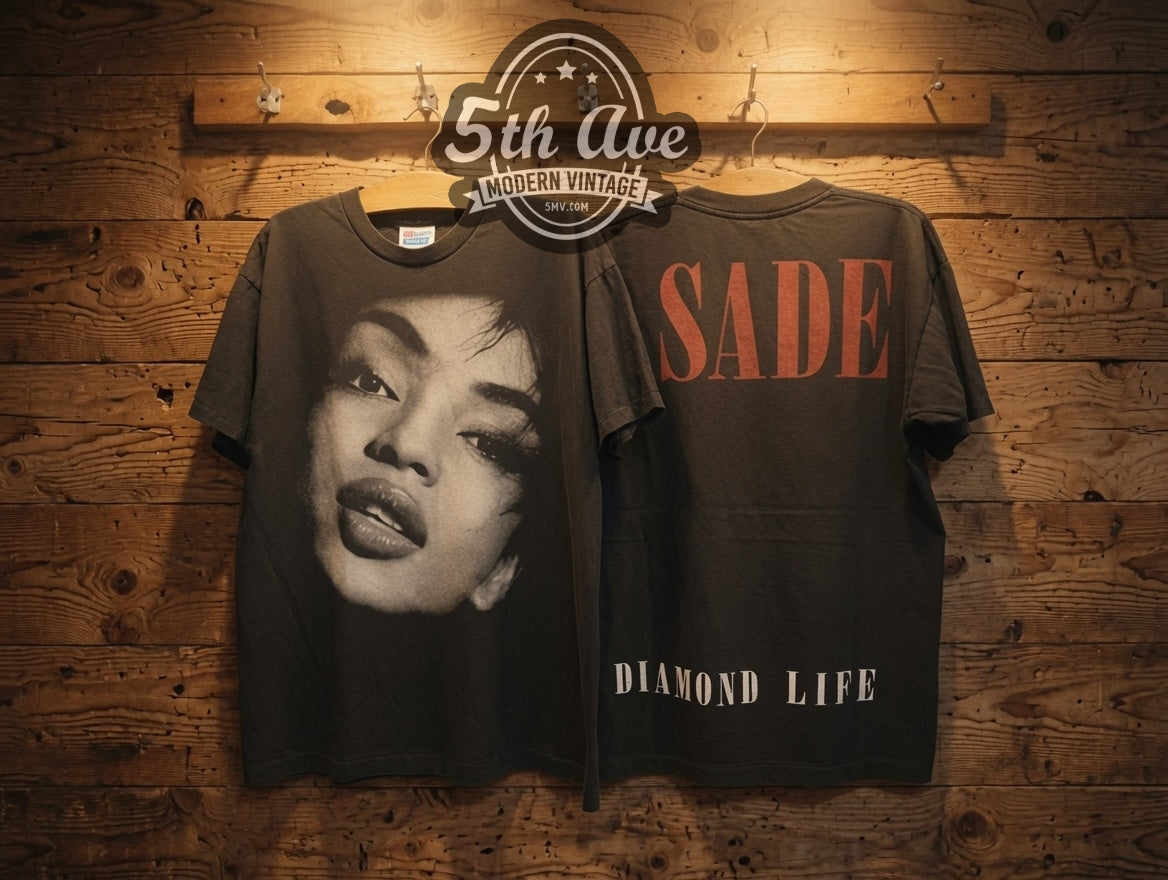
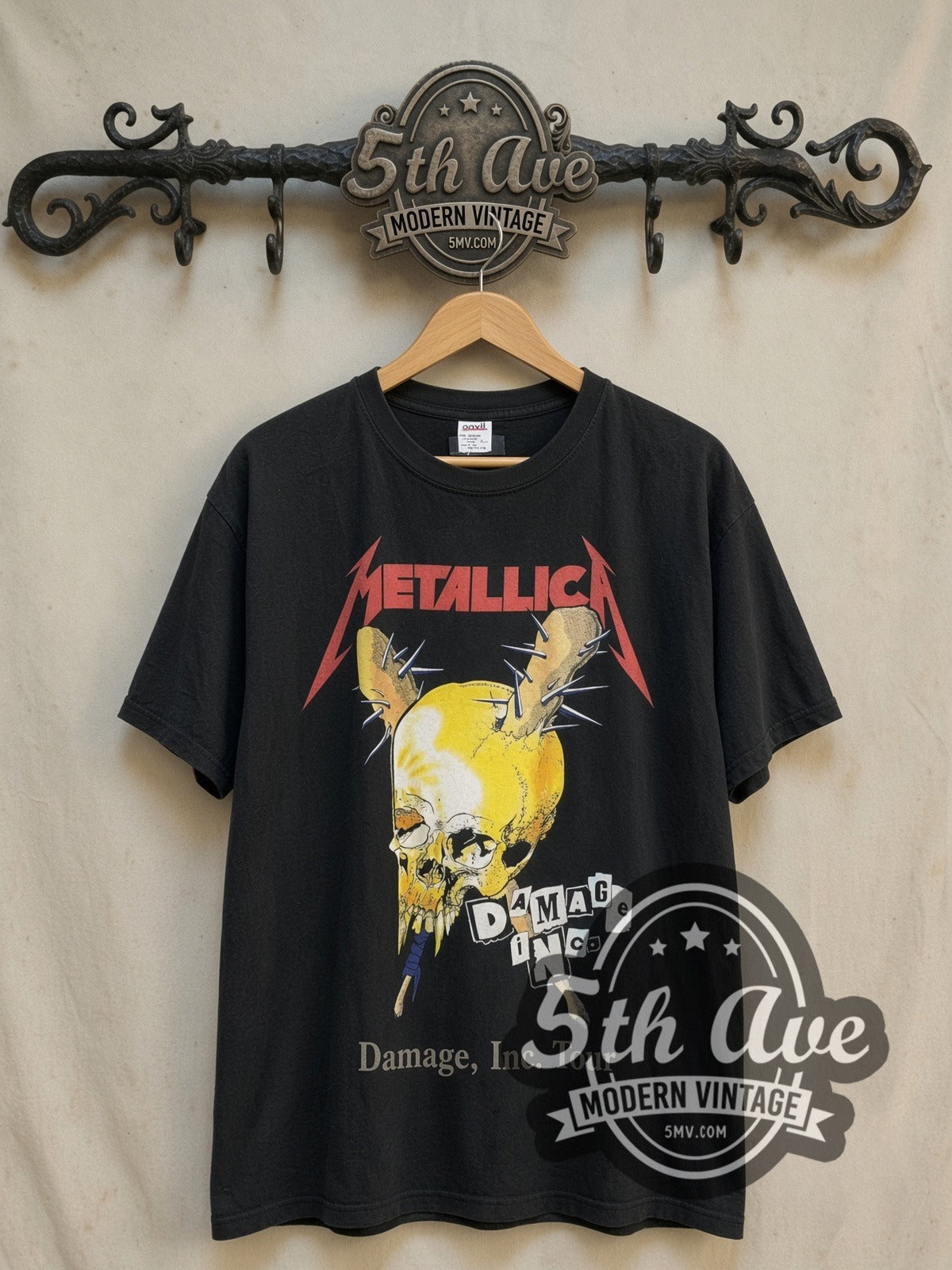
- Standard print — the graphic covers a significant amount of the chest area.
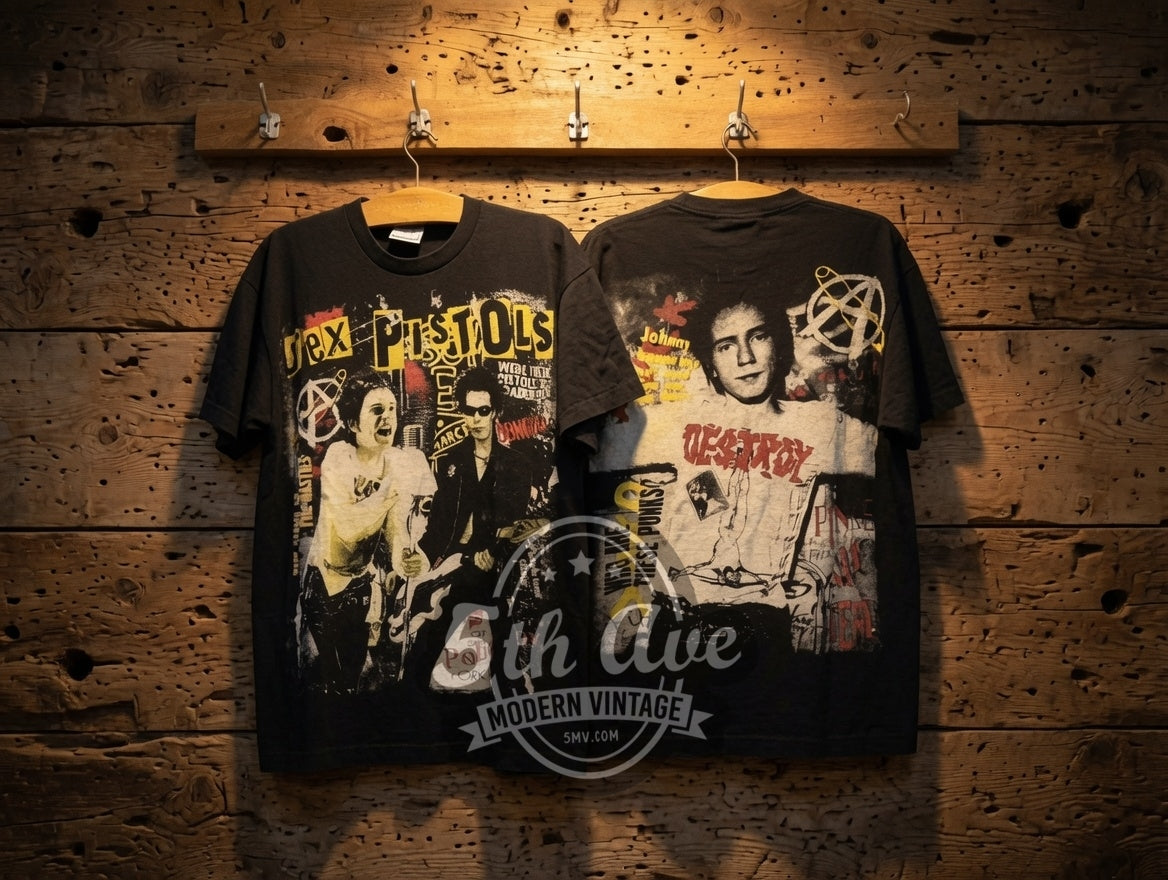
- Overprint — the graphic can cover the entire shirt, including sleeves and collar.
We sell new vintage reprints — new shirts, made now, with vintage-style construction and print placement. Not authentic deadstock. Not a claim that a tee survived a 1992 tour bus. Just honest reprints that wear right.
Standard print — big chest energy
A standard print is the classic front-and-center look. The art takes up a significant chunk of the chest — album cover, tour logo, big face, bold type — so it reads from across the room when you are facing someone. Back prints, when they show up, usually sit in that same “main panel” idea: a solid graphic zone, not ink wrapping every seam.
That is the default mental picture for most vintage band tees and concert shirts. Chest hits hard. Sleeves and collar stay mostly blank cotton. Easy to layer under a jacket. Easy to spot in a thrift pile.
- Significant chest coverage (the main graphic zone)
- Optional back print in the same spirit
- Sleeves and collar usually left clean
- Reads as the familiar “band tee” silhouette
Overprint — full shirt, sleeves, collar
An overprint goes further. The design can cover the entire shirt — body, sleeves, and collar — so the garment itself becomes the graphic. Think all over print pattern, wraparound tour art, sleeve hits that connect to the chest, collar ink that does not quit at the neckline — the same idea Google shoppers search as an all over print t-shirt. You are not just wearing a logo on a blank blank; you are wearing the print.
- Coverage can run full body
- Sleeves can carry the art
- Collar can be printed too
- Bigger visual impact, more “statement” energy
Overprints cost more production attention (alignment, coverage, how the art wraps seams), which is why they feel special next to a standard chest hit. Both belong in a serious rack. They just wear differently.
What people actually search (US demand)
Shoppers rarely type “overprint” into Google. They type all over print. Fresh US monthly search estimates (Semrush Keyword Overview / free volume checker, United States) for the cluster that maps to full-coverage prints:
- all over print t shirt — about 590 searches/month
- all over print shirt — about 480/month
- all over print t-shirt (hyphen) — about 70/month
- all-over print t-shirt — about 10/month
- overprint t-shirt — about 10/month
So when we say overprint on 5MV, we mean the same coverage shoppers hunt as an all over print t-shirt — art that can own the whole garment, sleeves and collar included — not a tiny chest stamp. The spaced “t shirt” spelling carries most of the search demand; we still use “t-shirt” in titles for readability and keep the close variants in tags and body copy.
Volumes are Semrush US estimates of Google search demand (checked Sep 2026), not a live pull from your Google Ads Keyword Planner account. Treat them as directional.
Quick compare
| Standard print | Overprint | |
|---|---|---|
| Coverage | Significant chest (and often a back panel) | Can cover the whole shirt |
| Sleeves | Usually blank | Often printed |
| Collar | Usually blank | Can be printed |
| Vibe | Classic band-tee chest hit | All-over / wraparound statement |
Ours are single-stitched
Print coverage is only half the story. Almost all of our shirts are single stitch at the hem and sleeve — the old-school construction you see on classic tour tees before double-needle hems took over. Single stitch sits flatter and drapes a little looser after wash, whether the art is a big chest standard print or a full overprint. It is a construction call for new vintage reprints, not a claim that the shirt is authentic era deadstock.
Deeper dive: single stitch, old-school style.
Want it distressed? You can opt in
Standard or overprint, you can push the tee further with our distressing add-on — tasteful holes and cuts, then a cellulase enzyme wash so the edges fray soft and look aged.
- $20 shirt distressing on the product page checkbox (adds about 7–10 days to delivery)
- Standalone listing: Shirt Distressing add-on
- Custom asks: email eve@5mv.com
We cut first, then wash — so the holes look old, not fresh. Full walkthrough: how we distress band t-shirts.
What to grab next
Shop band t-shirts for the core rack, or Shop All if you are mixing tees with jeans and jorts. Look at the photos for coverage: big chest = standard print energy; art that runs sleeves and collar = overprint territory. Add distressing if you want the thrash.
New vintage reprints. Single stitch as standard. Distressing when you ask for it.